01
Chain-first tools
Broker chains expose contracts, but they do not help you compare structures, reward, risk, liquidity, and fill quality as one decision.
greeqs brings strategy discovery, order building, risk, position monitoring, and review into one desktop workspace.
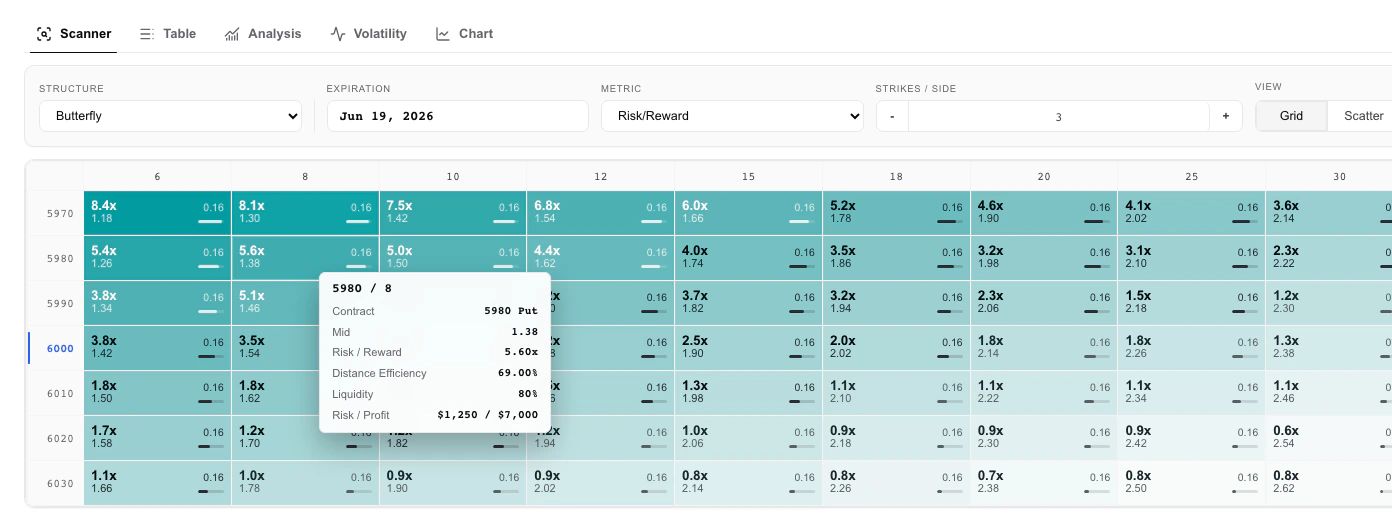
Most broker interfaces are built around chains and tickets. But active traders need discovery, modeling, risk, account context, and review to live together — before a trade becomes one more isolated order.
Broker chains expose contracts, but they do not help you compare structures, reward, risk, liquidity, and fill quality as one decision.
The idea, order ticket, payoff model, open position, and trade journal usually live in separate places with separate context.
Max loss and buying-power effect often appear after the order is assembled, even though they should shape the trade from the start.
After the trade closes, performance and notes are rarely connected back to the setup that created the position.
greeqs treats the trade as a lifecycle: discover the structure, shape the idea, review the order, understand account impact, follow the position, and learn from the outcome.
Grid turns strategy candidates into a compact surface where reward, risk, width, price, and liquidity can be compared at once. It is the discovery view a contract chain was never built to be.
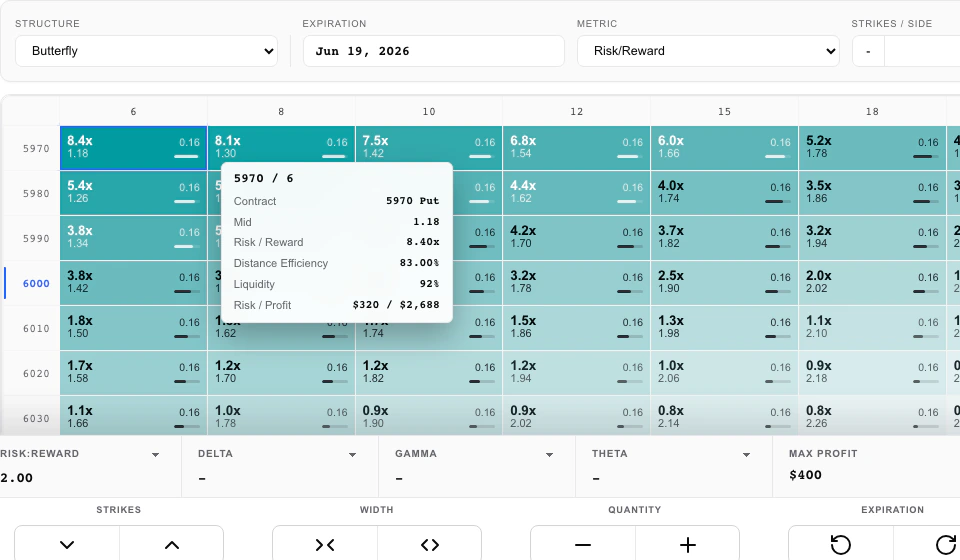
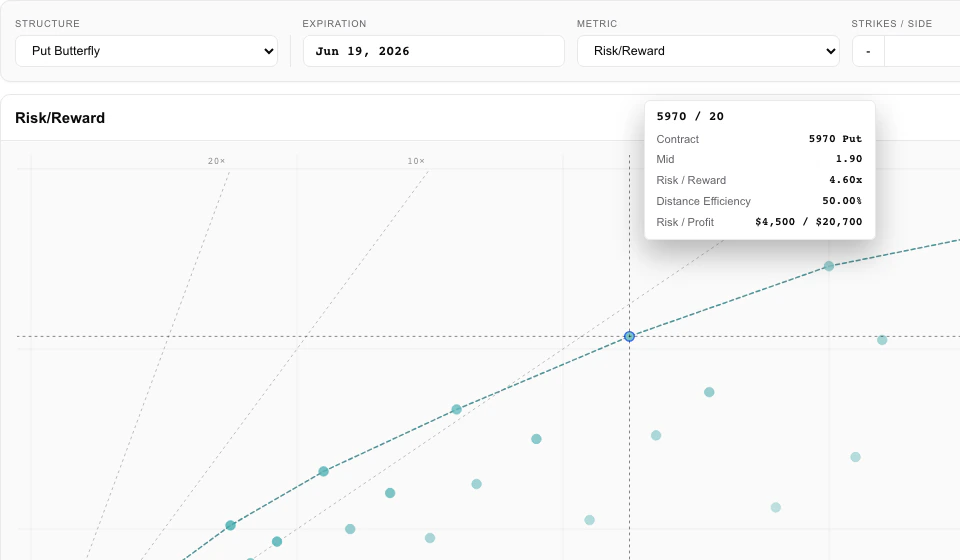
Scatter makes the trade-off visible: which candidates offer more reward for the risk, and which ones are just noise with a wider market. It is the faster way to narrow the search.
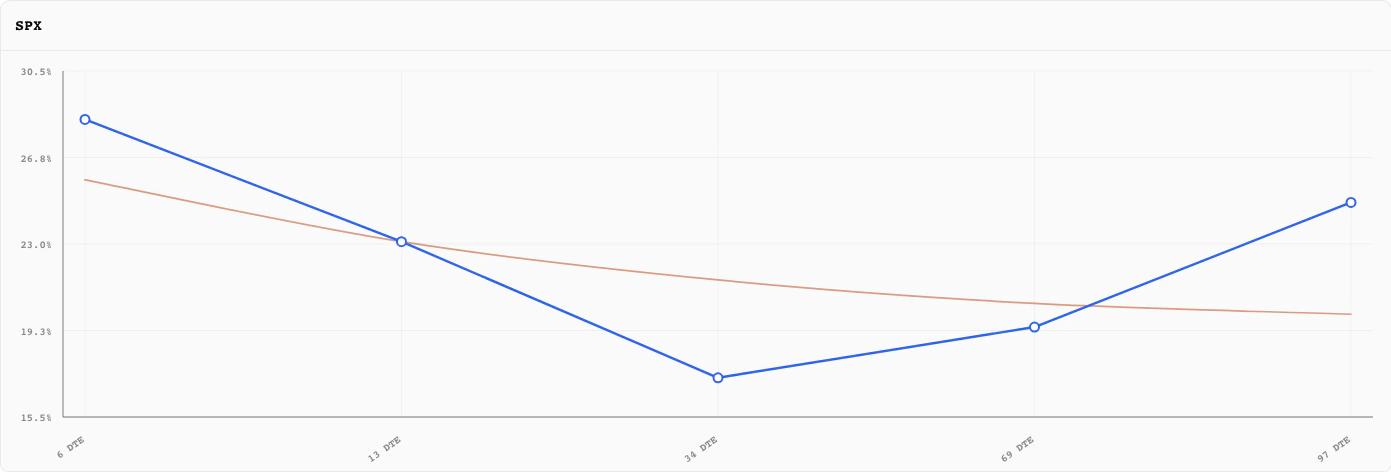
Volatility Curve keeps the selected ticker's implied-volatility term structure in the Research workflow, so expiration choice reflects where volatility is priced before you move into exact contracts.
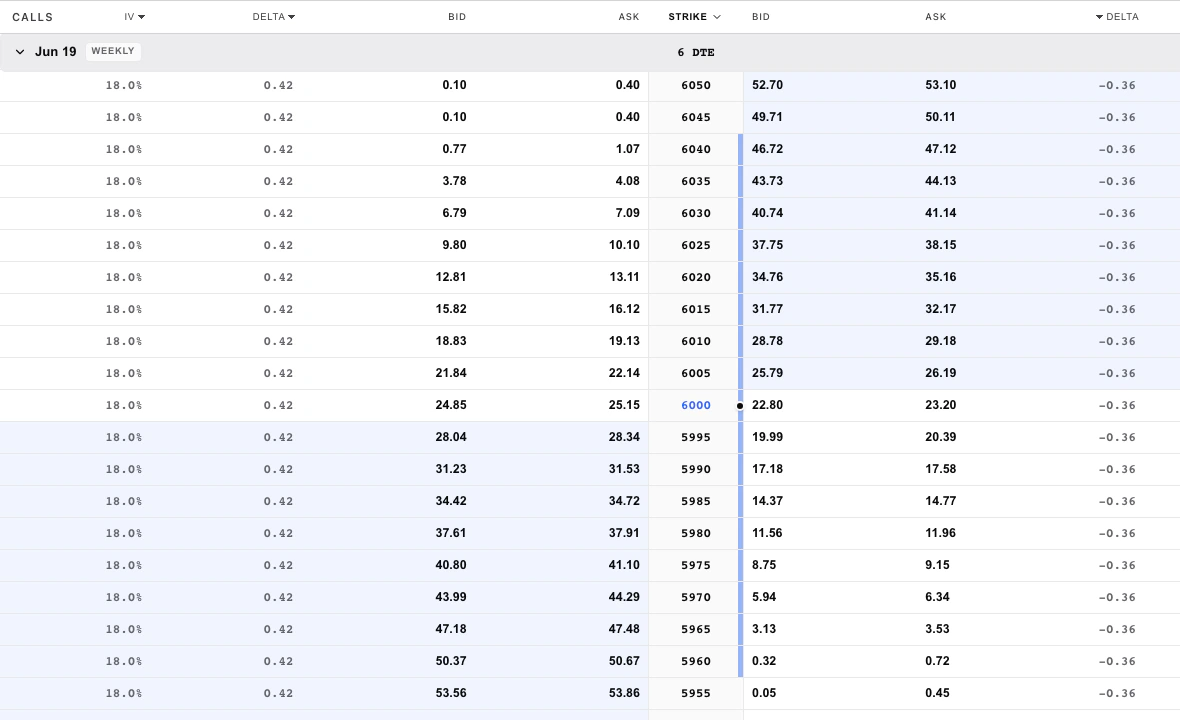
The classic strike table is still there when you need raw contracts, bid/ask rows, and expiration groups. It may not be the clever way to find structures, but some workflows deserve a familiar escape hatch.
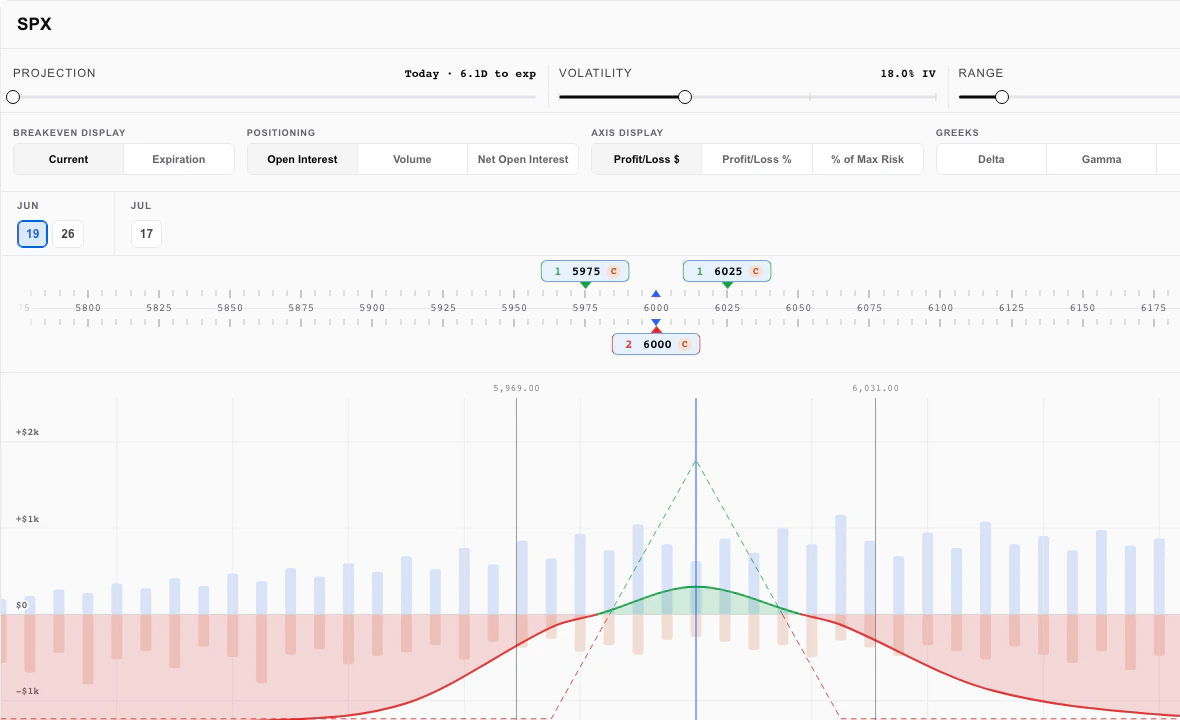
Analysis is for traders who already have an idea and want to model it directly. Move expirations, strikes, quantities, and projection time while the payoff stays in front of you.
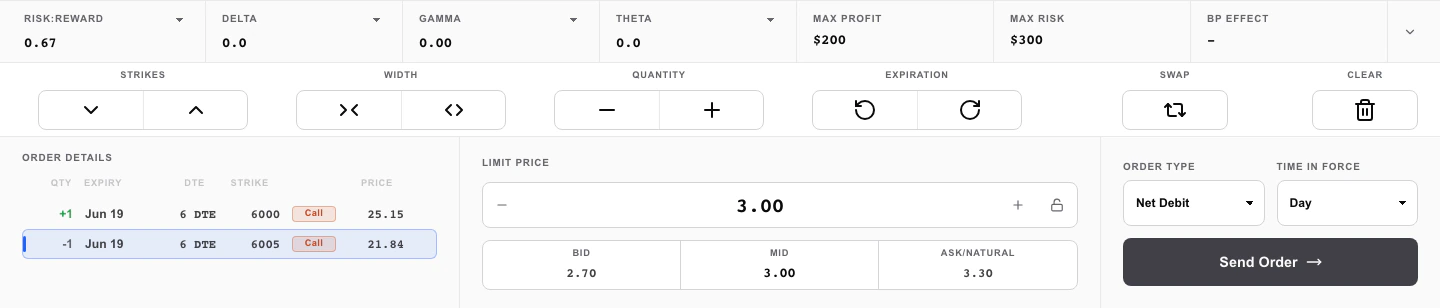
Choose a candidate and the shared Research order panel opens with the legs, pricing context, and risk numbers you were already using. Adjust strikes, width, expiration, or quantity without leaving the lifecycle.
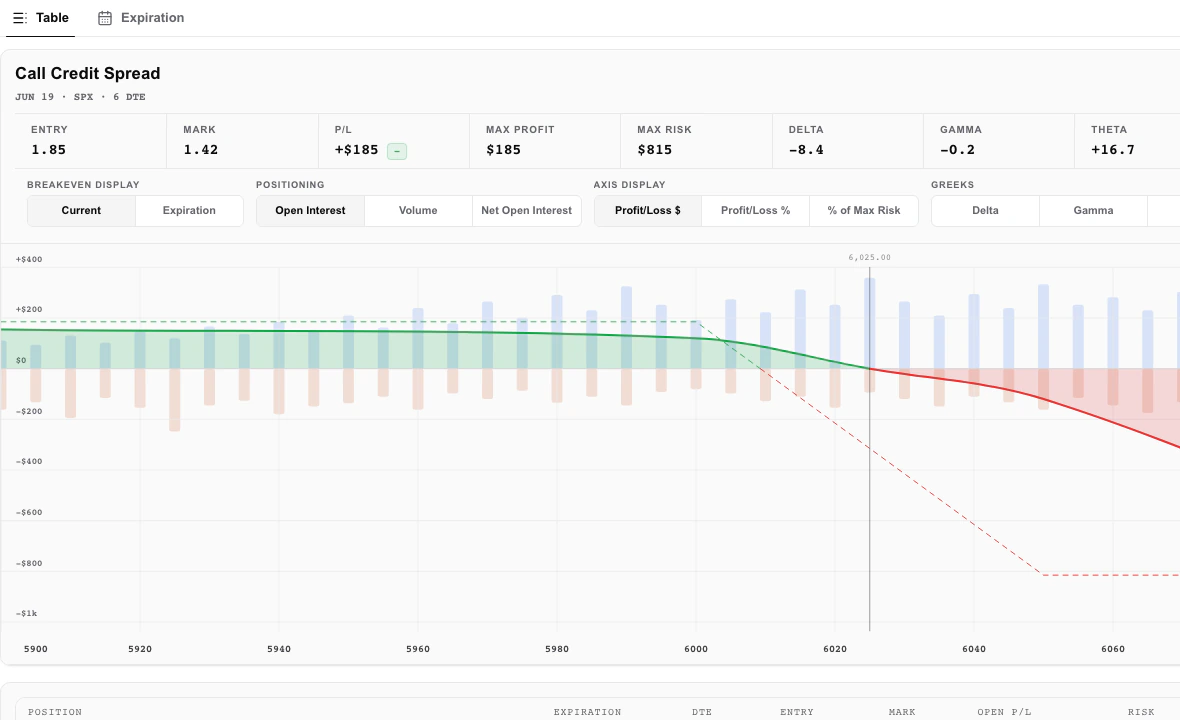
Your open positions, selected-position payoff, Greeks, risk, and buying power stay in view. See what you already hold and how a new idea fits beside it without leaving the workspace.
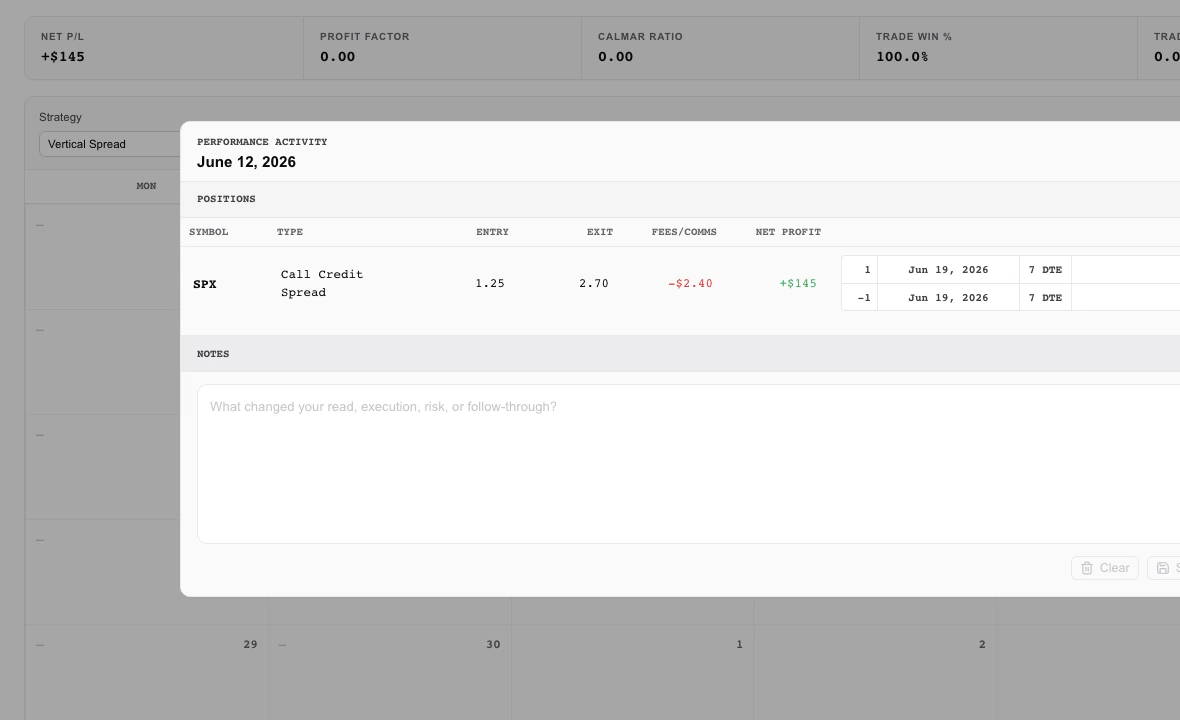
Keep realized outcomes, trade counts, win rate, and journal notes attached to the day they happened. Review what worked, what did not, and which structures deserve more attention.
greeqs improves how you research, stage, review, and learn from options trades. It is an interface layer, not a broker-dealer, adviser, or signal service.
greeqs gives the workflow a sharper surface. It does not custody assets, route orders, or replace your brokerage relationship.
Max loss, buying-power impact, payoff, and position context stay visible before an order is staged.
No probability promises, guaranteed returns, signals, or recommendations. greeqs is the interface, not the answer.
greeqs gives active options traders one desktop workspace for discovery, order building, risk, position monitoring, and review before the next decision reaches the broker.